 Historical
H.H. Holmes' Devil's Food Cake
A popular dessert from the era of America's first documented serial killer.
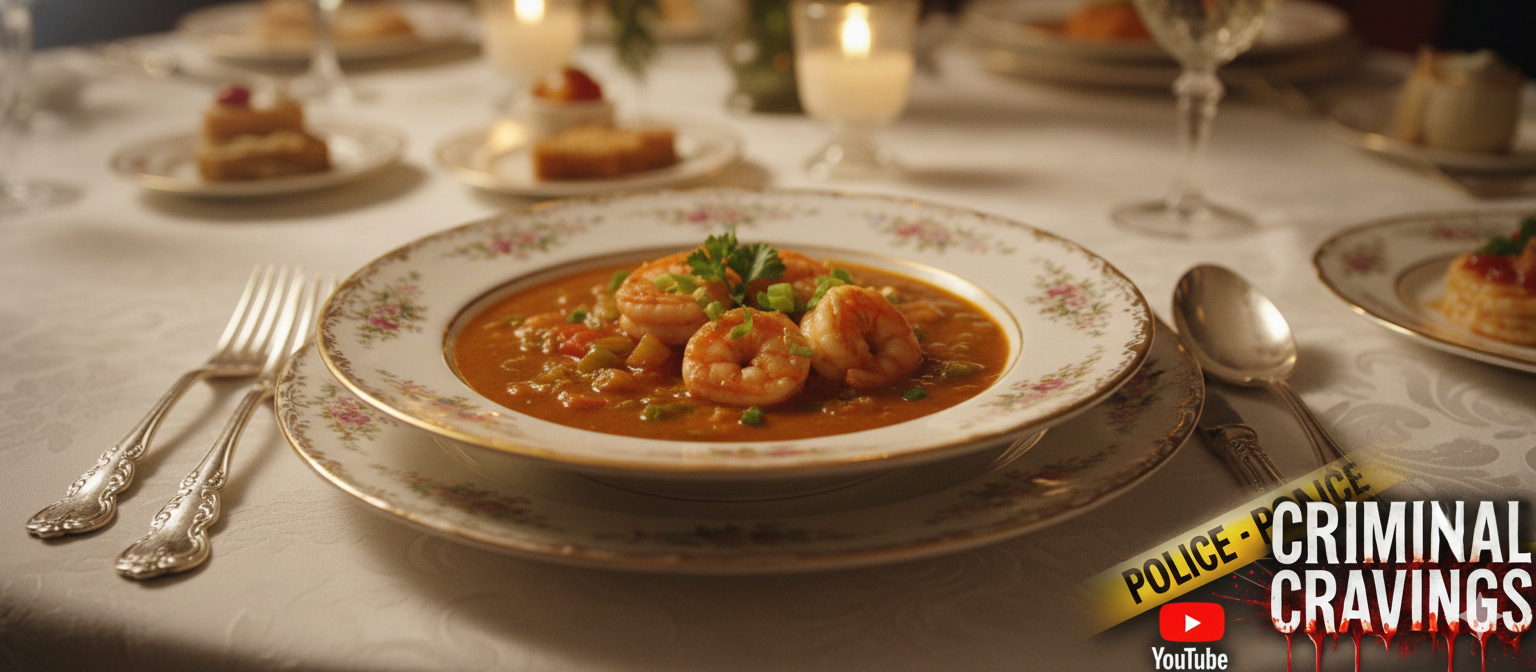
A classic Louisiana Creole dish that would have graced the tables of New Orleans high society in the 1830s. This rich, buttery shrimp stew smothered in a light roux represents the refined French-Creole cuisine of the era when Delphine LaLaurie hosted lavish parties at her Royal Street mansion.
Delphine LaLaurie was a New Orleans socialite who hosted the most coveted dinner parties in 1830s Louisiana high society. Her lavish Royal Street mansion was known for its elegant entertaining, with tables set with fine French cuisine prepared by her enslaved kitchen staff.
Étouffée, meaning "smothered" in French, was the style of cooking that defined Creole cuisine during this era. The wealthy Creole families of New Orleans, including the LaLauries, would have served dishes like this at their elaborate gatherings.
In April 1834, a fire broke out at the LaLaurie mansion, and what rescuers discovered in the slave quarters shocked even a city accustomed to the horrors of slavery. Tortured and mutilated enslaved people were found chained in the attic, revealing Delphine's secret: she had been systematically torturing those in her household for years.
A mob descended on the mansion, destroying its contents, while Delphine fled to Paris, where she lived out her remaining years in exile. The mansion still stands today on Royal Street, considered one of the most haunted locations in New Orleans.
This recipe represents the stark contrast of LaLaurie's public life - the refined hostess serving elegant Creole cuisine - and the unspeakable cruelty she inflicted in private.
More dishes from criminal history.

